

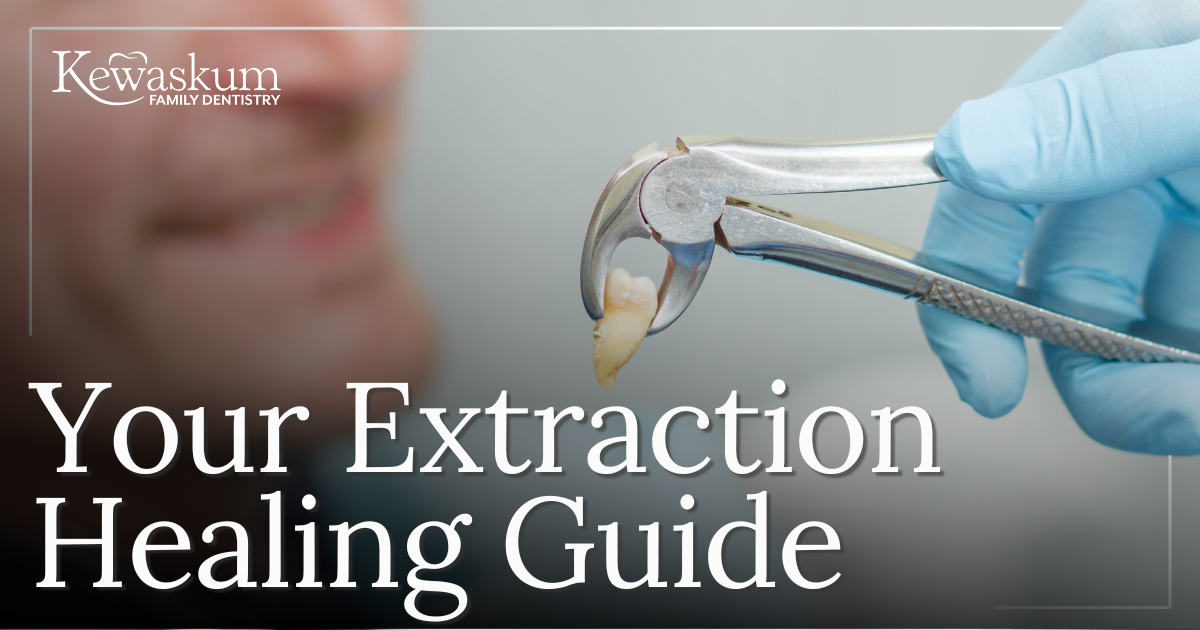
What Happens After A Tooth Extraction?
Hearing that you need a tooth extracted can feel overwhelming. For many patients, the biggest concern is not the procedure itself, but what happens afterward. How long will it hurt? How do you eat? What is normal during healing?
The good news is that recovery is usually straightforward. When you understand what your body is doing and how to support it, the process feels much more manageable.
The First 24 Hours: Protecting the Clot
Right after a tooth extraction, your body begins forming a blood clot in the socket. That clot is essential. It protects the bone and nerves underneath while healing begins. You will likely bite down on gauze for a short time to control bleeding. Mild oozing is normal during the first day. Some swelling and tenderness are also common.
Rest is important during this phase. Using a cold compress on the outside of your cheek can help reduce swelling. Avoid vigorous rinsing, using a straw, or smoking, as these actions can disturb the clot. Protecting that clot is the key to an easy recovery.
Days 2 and 3: Mild Discomfort and Swelling
As the initial numbness wears off, you may feel soreness in the area. This is normal and usually manageable with recommended pain relievers. Swelling often peaks around the second or third day, then gradually improves.
Eating soft foods like yogurt, soup, mashed potatoes, or scrambled eggs can keep you comfortable while the area heals. It is also important to keep the area clean. Gentle brushing around the site and light saltwater rinses after the first 24 hours help reduce bacteria without disrupting healing.
The First Week: Tissue Begins to Close
Over the next several days, your gum tissue begins to close over the extraction site. You may notice the area looking slightly white or yellow. That is part of normal healing tissue formation.
Tenderness should steadily improve. If pain increases instead of decreases, especially after a few days, it may indicate a condition called dry socket. This happens when the clot becomes dislodged. Contacting us immediately ensures prompt, comfortable treatment. Most patients feel significantly better within a week.
What About Long-Term Healing?
While the surface gum tissue heals fairly quickly, the bone underneath takes longer to fully remodel. Over the next few weeks and months, that area will continue to strengthen.
If the extracted tooth needs replacement, such as with a dental implant or bridge, your dental team will guide you on the right timeline. Planning ahead helps preserve alignment and jaw stability.
Supporting a Smooth Recovery
Healing after a tooth extraction is a natural process. We advise:
- rest
- soft foods
- good oral hygiene
- following our instructions
All support proper recovery. If you have questions or notice anything that feels unusual, contacting us early is always helpful. Most extractions heal without complications, allowing a return to normal comfort sooner than many people expect.
Schedule an evaluation today at our office located in Kewaskum, WI. Understanding what to expect helps you feel assured every step of the way.